
This project develops Radio Stripe–based cell‑free massive MIMO techniques to deliver reliable wireless coverage in challenging environments. By combining distributed access points with adaptive hybrid reception and mobility‑aware processing, it aims to improve signal robustness, efficiency, and connectivity for users moving through rapidly changing wireless conditions.
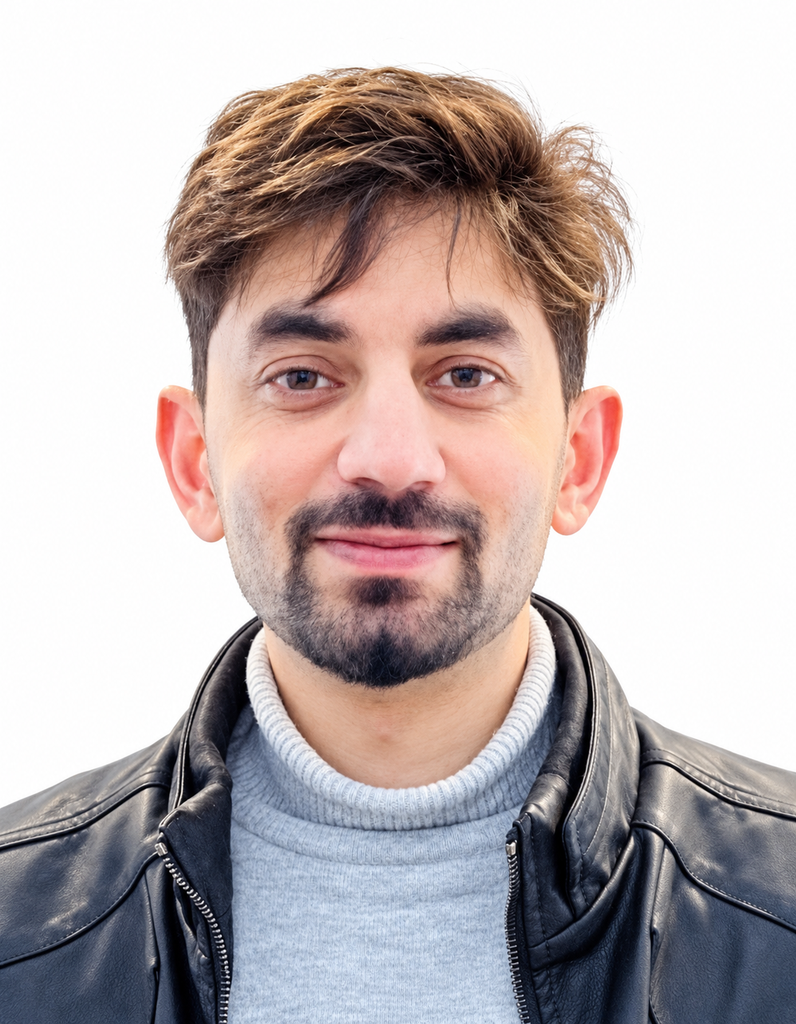
Daud Khan
Daud Khan is a PhD researcher in Electrical Engineering at the University of Aveiro, Portugal, working at Instituto de Telecomunicações.. He received his B.S. in Electrical (Communication) Engineering from the University of Engineering and Technology, Peshawar, and his M.S. from Inha University, South Korea. Before joining ANCHOR, he worked as a research assistant at the Mobile Telecommunication Research Laboratory (MTRL), contributing to research on 5G vehicle communications, cooperative perception, multi‑sensor fusion, and deep reinforcement learning for Level‑4 autonomous driving. He has authored SCI‑indexed publications, contributed to patent filings, registered a software simulator with the Korea Copyright Commission, and participated in major government‑funded projects, including 5G V2X Service and 5G NR‑V2X IP.
Project Overview
The research focuses on improving wireless coverage and reliability through Radio‑Stripe‑based cell‑free massive MIMO networks, where distributed access points cooperate to receive users’ signals. The work aims to maintain consistent connectivity for users experiencing weak reception or moving through dynamic wireless environments. Focusing on sub‑6 GHz operation, it investigates hybrid analog‑to‑digital reception to reduce hardware requirements, alongside sequential processing that progressively refines signal estimates across access points. The research also examines when near‑field propagation must be considered for accurate channel estimation and reception. To address user mobility, it explores how channel estimates and receiver settings should adapt as conditions change. Through modeling and simulation, the project evaluates the proposed methods against established receivers, considering coverage improvements, training overhead, computational demands, and information exchange. The anticipated outcomes are expected to impact the practical design of efficient and reliable distributed wireless networks, with potential applications in industrial facilities, transport hubs, and other environments requiring dependable connectivity.
Supervisors
Dr Adao Silva
Dr Daniel Filipe Marques Castanheira
Affiliation
University of Aveiro — Department of Electrical Engineering
Instituto de Telecomunicações (IT), Aveiro
Related Links